
Thrift Stores Tennessee Guide

A Tennessee thrift store is not simply a place where every donated object moves straight from a car trunk to a sales floor. Staff may sort goods by condition, season, demand, safety, and whether the item can be handled responsibly. Clean, usable clothing and household goods may be priced for resale, while some textiles may be directed toward recycling or another recovery option. Wet, moldy, heavily soiled, recalled, or unsafe items generally create problems rather than helping. Acceptance rules differ by organization and location, so checking current guidance before loading your vehicle can prevent a wasted trip and an awkward drop-off. Consider a hypothetical donor clearing a Nashville apartment before moving. A few boxes of washed clothing, paired shoes, complete dishes, and a small table with no structural damage might be suitable for a staffed drop-off. A sofa with a strong odor, a bag containing mildew, or an appliance with missing safety parts could be refused. Donation quality does not mean everything must look new; ordinary wear can be acceptable when an item remains clean, functional, and presentable. An acceptance policy is simply the practical rule used to decide whether goods can be sold, recycled, or safely handled. Drop-off and pickup are different services, and confusing them can disrupt a moving schedule. With a drop-off, the donor brings items to a designated site during its operating hours. With pickup, an organization arranges transportation from the home, sometimes subject to service-area, vehicle-capacity, scheduling, or donation-volume limits. A person with two manageable boxes may prefer driving to a nearby location, while a household replacing bulky furniture may need to ask about pickup first. Free pickup, priority scheduling, and a planned donation drive can have separate requirements, so confirm the arrangement before placing goods outside. Another misconception is that a thrift store is only a resale shop with a charitable label. Some nonprofit resale programs direct earnings toward community needs such as education or healthcare, but missions and financial structures vary. The phrase profit from donations can also sound misleading. In practice, revenue must support ordinary costs such as labor, rent, transportation, sorting, and disposal before any remaining funds serve a mission. Those expenses help move goods from a home to another buyer. To compare organizations fairly, review their stated purpose and donation process, including this guide to thrift stores tennessee, instead of assuming every program works the same way. A price on a thrift-store shelf does not necessarily represent an item’s original retail value. A nearly new lamp may be priced according to local demand, available inventory, brand recognition, and its condition at that time. A basic kitchen appliance could therefore cost more than an older decorative piece that was expensive when first purchased. Resale can extend a product’s useful life, but reuse is not guaranteed. Goods that cannot be sold or responsibly processed may still require transportation and handling. Donors should therefore focus on honest condition and realistic usefulness rather than treating the store as a guaranteed destination for every unwanted item. Preparation makes a donation safer and easier to assess. Wash and fully dry clothing, pair shoes, place small household goods in a sturdy box, and keep cords, chargers, manuals, or accessories with the item they belong to. Check books, drawers, bags, and pockets for personal papers. Phones, computers, and storage media should be cleared of private data before they leave your control. If a tax record matters, ask about a receipt when donating, then keep an itemized note. Fair market value generally means what similar used goods might reasonably sell for, not what you originally paid, so consult a tax professional about documentation questions. The closest store is not always the most suitable route; match the service to the goods, timing, and transportation available. Before visiting, verify operating hours, accepted categories, accessibility, and whether staff can unload a vehicle. A small bag of clean clothing may suit a nearby bin or staffed site, while a neighborhood collection may require advance planning. If home service matters, review the organization’s current home donation pickup details and confirm that the address is inside its service area. This short check can clarify expectations, protect private information, and make decluttering more efficient without assuming that every Tennessee thrift program follows identical rules.
Basement Waterproofing: Fixes
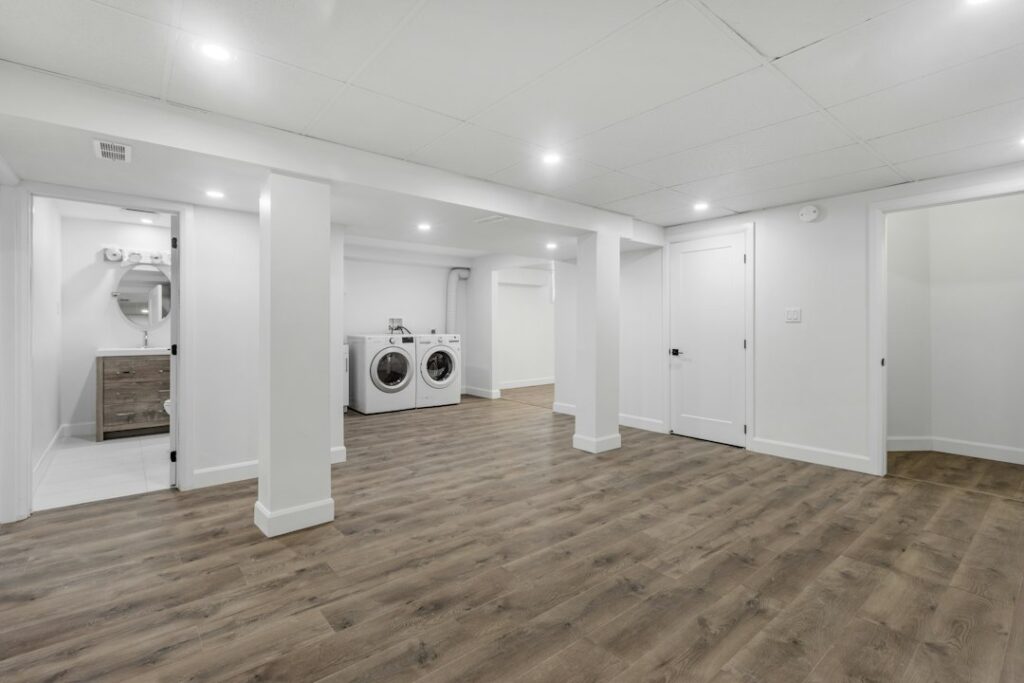
After a heavy storm, you find a damp strip along the basement wall, a musty smell near stored boxes, or a small puddle beneath a window. The first mistake is treating every leak as a wall problem. Water may be entering through a crack, a floor joint, a window well, or a failed drain outside. Start by recording where moisture appears, when it appears, and whether the ground was saturated. A leak that follows rain points toward surface drainage or pressure from wet soil, while steady dampness may indicate groundwater or condensation. That distinction prevents an expensive repair aimed at the wrong location. Hydrostatic pressure is the force groundwater exerts against foundation walls and floors. It rises when saturated soil has nowhere to drain, and it can push water through joints or widen existing cracks. Capillary action is different: porous concrete can draw moisture upward or sideways through tiny passages, even when no visible crack exists. This is why painting a damp wall often disappoints. The coating may hide the stain briefly, but it does not remove the water source. A practical inspection checks wall-to-floor joints, penetrations around pipes, masonry cracks, and the exterior grade before selecting an interior or exterior solution. Outside drainage is often the simplest place to correct a recurring problem. Gutters should discharge far enough from the foundation for local site conditions, and downspouts should not empty beside the wall. Soil that slopes toward the house can funnel stormwater into the foundation zone. Regrading, extending a discharge line, or clearing a blocked footing drain may reduce the load before any membrane is applied. For example, a homeowner may seal a basement crack in spring, only to see water return during the next summer storm because an overflowing downspout is still soaking the same corner. A liquid membrane can form a continuous waterproof layer over suitable prepared surfaces, but preparation determines whether it performs properly. Dust, loose concrete, oil, curing residue, and active flowing water can interfere with adhesion. Cracks and joints may need separate treatment rather than a single brushed coat. The installer should follow the selected material’s requirements for surface condition, coverage, curing, and compatible protection layers. A useful overview of basement waterproofing materials can help clarify the difference between a coating and a complete water-management system. Interior drainage has a different job from a wall coating. A perimeter drain, drain channel, or sump system collects water that reaches the foundation and directs it to a discharge point. The sump pump then lifts that water away from the structure. The basin needs a dependable power supply, a properly routed discharge, and maintenance access. A backup pump or power arrangement may be appropriate where flooding would cause serious damage, but it should be selected for the actual site. If a pump runs frequently, that pattern is useful evidence of groundwater conditions, not a reason to ignore the source. Efflorescence, the white powdery deposit left when dissolved salts travel through masonry, shows that moisture has moved through the material. It is not itself a waterproofing failure diagnosis, but its location can reveal a recurring path. Do not seal over loose deposits, flaking paint, or deteriorated mortar without cleaning and repairing the surface. A second example is a basement that feels humid but has no wet patches. That may involve condensation on cool walls rather than liquid infiltration. A dehumidifier can help indoor humidity, while insulation, ventilation, or a vapor-control strategy may address the underlying conditions. Before hiring anyone, ask for a clear explanation of the water path, the proposed control method, surface preparation, drainage route, and what happens if conditions differ after excavation or demolition. Take photos before work begins and keep records of storms, pump activity, and new staining. An independent water intrusion assessment can be useful when several causes overlap, especially in older foundations. The sound approach is not to promise a dry basement from one product. It is to manage water outside, seal appropriate pathways, collect unavoidable water, and maintain the system afterward.
Cognitive Enhancement Therapy for Focus and Daily Function

A student can spend an hour on one textbook page, then realize that the instructions for the assignment were missed entirely. Before an exam, that pattern is often interpreted as laziness or inadequate effort. A phone app promising faster thinking may add another problem: the student starts chasing higher scores while deadlines, conversations, and ordinary details remain difficult. Cognitive performance is not one adjustable trait. Trouble may involve planning, sustained attention, working memory, task switching, or social reasoning. Effective support starts by identifying the specific breakdown and linking practice to the activities the person needs to manage outside a clinic. cognitive enhancement therapy questions about cognitive health